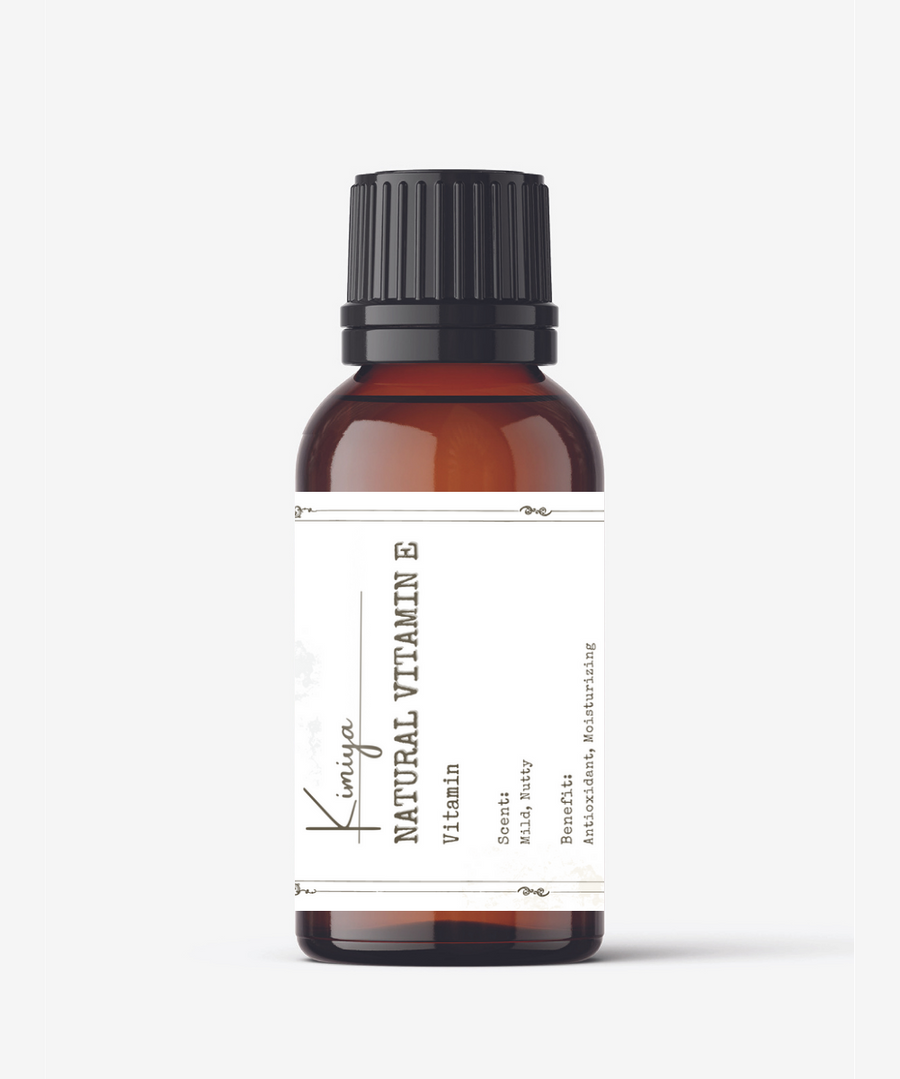
vitamins / antioxidants · vitamin antioxidant ingredient
vitamin e
Vitamin E is a viscous, amber oil that works as a vitamin antioxidant ingredient, for use in your formulations. A considered addition for specialty blends.
vegansingle-ingredientnon-gmo
kimiya workshop · at a glance
vitamin e
vitamins / antioxidants — vitamin antioxidant ingredient
- inci
- tocopherol
- role
- vitamin antioxidant ingredient
- form
- viscous liquid; amber
- use level
- low — commonly 0.1–1% as an antioxidant; confirm per tds
- shelf life
- 12 months
origin · chinafor the maker's bench
01why formulators use it
- a antioxidant support commonly added to slow rancidity in oil phases and extend the life of oil-rich blends.
- b oil-phase friendly a viscous, oil-soluble liquid that blends into oils, butters and balms.
- c low dose, wide reach typically used at fractions of a percent, so a small bottle covers many batches.
- d skin-care staple a familiar label ingredient customers recognize and look for.
02where formulators use it
- a facial & body oils a low-percentage antioxidant addition to protect the blend.
- b balms, butters & lip care guards rich oil phases against going rancid.
- c anhydrous scrubs & bars extends the life of oil-heavy wash-off products.
- d diy blends the standard finishing touch to homemade oil mixes.
- e label appeal listed on-pack where customers expect to see vitamin E.
03technical details
| product identity | Vitamin E |
|---|---|
| inci | TOCOPHEROL |
| appearance | Viscous Liquid; Amber |
| odor | Mild |
| solubility | Oil-soluble; insoluble in water |
| suggested use | Low — commonly 0.1–1% as an antioxidant; confirm per TDS |
|---|---|
| shelf life | 12 Months |
| country of origin | China |
| packaging | Tincture |
| direct-use status | External use only · not for ingestion |
skus ·KIM-CSM-001-15M ·
KIM-CSM-001-30M ·
KIM-CSM-001-50M
△
handle with care
external use onlynot for ingestion
04
complete your formula
everything a formula needs, from one bench
05
maker reviews & questions
questions
Qwill this preserve my product?
kimiya staffNo — it's an antioxidant, not a preservative. It slows oils going rancid but does not control microbial growth; water-containing products still need a preservative.
Qhow much do i use?
kimiya staffAntioxidant use is commonly a few tenths of a percent; confirm the form and dose per the TDS.